

01 · Software modernisation
From outdated systems to modern, secure, and AI-ready platforms.
Most legacy systems do not fail all at once. First they slow development, raise running costs, and build security and NIS2 exposure. A detailed assessment shows where modernisation is worthwhile, what delivers quick business results, and how an AI-ready architecture can be built without interrupting day-to-day operations.
NIS2-aware modernisation
Vendor lock-in free
Senior architect led
Risks
Roadmap
Dependencies
Findings
4 identified
Unsupported framework
High
Security exposure
Critical
Supplier dependency
medium
Integration bottlenecks
High
02 · The Real Problems
A legacy system is not just a technology problem but a serious business risk
Most modernisation projects do not begin with a new system. They begin when current operations have become too slow, too costly and, above all, too risky.
Exposure to security threats
Security updates months behind and unsupported components.
Critical
Supplier dependency
System operation depends on a single external developer or a former team member.
Dependency
Integration bottleneck
Every new integration causes regressions and manual workarounds.
Friction
AI-blocking architecture
The current architecture prevents AI use cases from being integrated securely.
Blocker
03 · High-Level Audit
A decision-ready roadmap and blueprint
The detailed technical assessment maps the system landscape, the technology and security risks, and the quick wins where modernisation can deliver business results even in the short term.
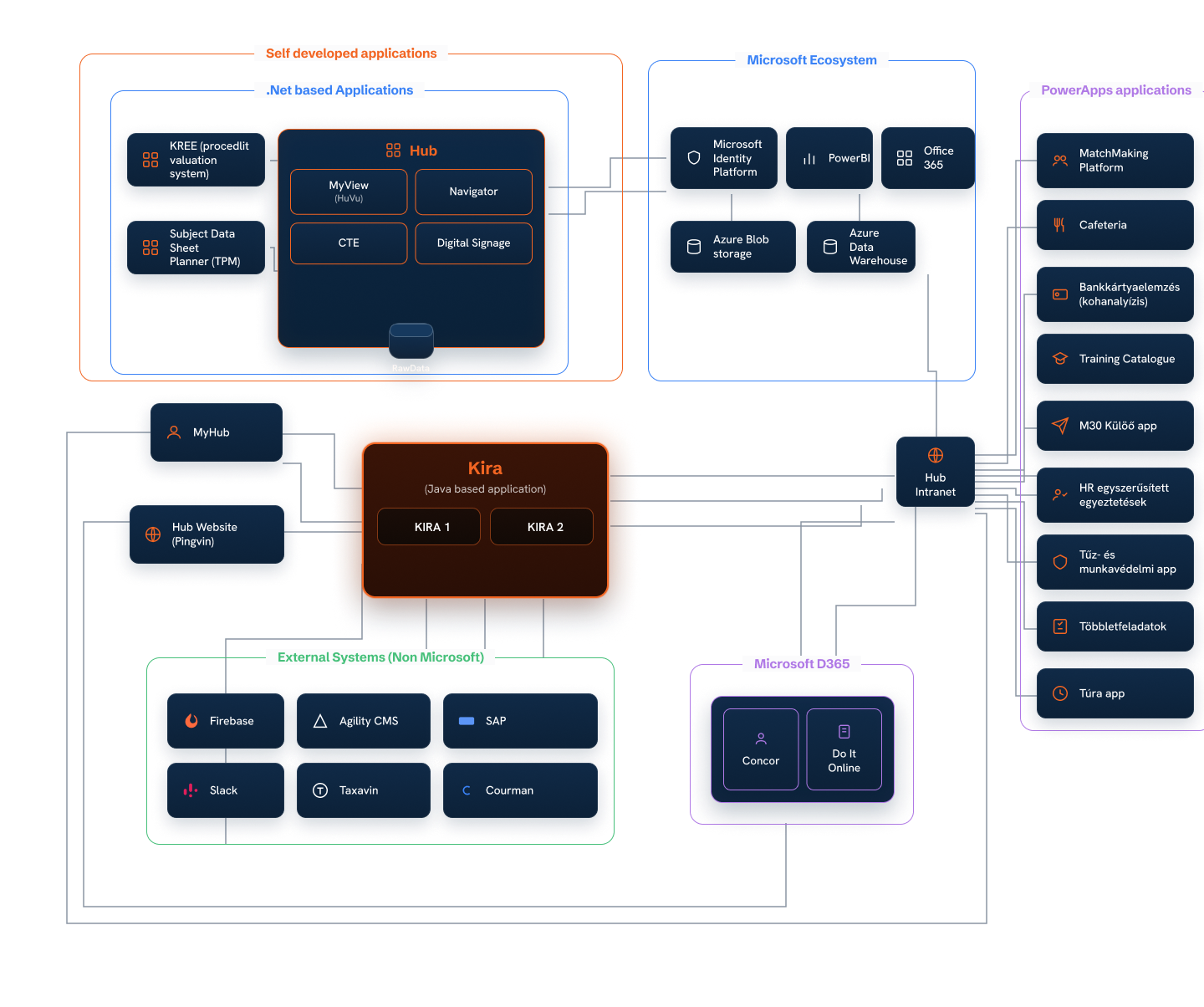
Architecture map
Mapping the current system landscape
Security exposure
Vulnerabilities and NIS2 exposure
Technical debt
Outdated components and dependencies
Quick wins
Short-term, high-impact steps
AI-ready architecture
Where modernisation opens the way to AI integration
Return model (ROI/TCO)
Estimated return and cost
Architecture map
Own
Microsoft
PowerApps
External
04 · The Process
How the assessment works
01
Kick-off and scope
NDA, business and technology questionnaire, and scoping of the assessment.
02
Technical assessment
Layer by layer: infrastructure, database and data model, backend and business logic, frontend, integrations, operations.
03
Stakeholder interviews
Four to five focused interviews: executive and vision, usage, operations, development, QA.
04
Risk and quality assessment
Scalability, code quality, technical debt, reliability, security and maintainability, with scoring and risk analysis.
05
Report and recommendation
A high-level system design, technology and operations recommendations, plus an overall verdict and cost estimate: refurbishment versus rewrite.
Modernisation Roadmap
From legacy system to AI-ready platform
A phased approach to reduce risk, accelerate delivery and unlock business value.
01
ASSESSMENT
Foundation
0 to 1 month
Architectural assessment
Dependency mapping
Technical debt analysis
Security and compliance review
Identifying quick wins
High-level roadmap
Outcome
Assessment report and roadmap outline
02
STABILISATION
Risk reduction
1 to 3 months
Stabilising critical systems
Increasing test coverage
Strengthening security
Reducing operational risk
Addressing high-impact defects
Preparing for migration
Outcome
Stabilisation report and action list
03
MIGRATION
Core modernisation
3 to 9 months
Transition to the target architecture
Move to the cloud (Azure)
Modernising the data layer
Optimising user workflows
API-first integration
Setting up CI/CD
Outcome
Modernised platform and migration report
04
AI ADOPTION
Value creation
9 to 12+ months
AI in core processes
Automating manual processes
Introducing advanced analytics
Personalised customer experience
Establishing AI governance
Measuring and optimising value
Outcome
Deployed AI capabilities and a business results report
BUSINESS BENEFITS
Lower risk, better compliance
Faster development cycles
Lower TCO (30–50%)
Less dependency on key people
AI efficiency and innovation
05 · Quick Wins
Let us identify the opportunities that can deliver results in a short time
Authentication modernisation
↓ 42% support tickets
API consolidation
3 legacy systems retired
Reporting automation
8 hours / week saved
AI-assisted documentation
Faster onboarding
Cloud optimisation
Lower overhead
Reducing supplier dependency
Less lock-in
06 · The People
Our senior architects lead the consultation
Architects who work daily on international enterprise modernisation projects, not sales coordinators.
Péter Szilágyi
Senior Enterprise Architect
15+ years of experience
Legacy modernisation
Cloud migration
Security architecture
AI-ready systems
András Leskó
Modernisation Lead
10+ years of experience
System consolidation
Enterprise delivery
Regulated environments
AI-ready systems
Zoltán Rak
Senior Enterprise Architect
Over 20 years of experience
Modernizing Legacy Systems
Cloud-Native Architectures
KI-Supported Development
DevOps and Infrastructure as Code
Attila Tóth
Managing Director, Gloster GmbH
Over 20 years of experience
Software Development
Project Management
Legacy Modernization
Implementation of Enterprise Projects
07 · Who is it for
For mid-sized and large organisations where IT efficiency already affects competitiveness directly.
CEO
Technological risk is slowing growth.
CTO
Legacy dependencies are blocking modernisation.
Business Lead
The IT budget is growing faster than the value delivered.
08 · Why Gloster
Enterprise modernisation without the AI hype.
Gloster was modernising enterprise systems long before the AI wave. Today’s workflow and AI tools accelerate that delivery model, they do not replace it.
Enterprise delivery experience
NIS2-aware modernisation
A vendor lock-in free approach
Senior architect led planning
International delivery
TIER2 supplier qualification
15+
years of enterprise delivery
100+
enterprise systems
NIS2
aware modernisation
09 · Engagement
The first step is a fit-check. Then a detailed Tech Due Diligence.
First we scope, then we assess, with a decision-ready plan and cost estimate.
Fit-check (free)
Best for: the first step, scoping the assessment
A 1 to 2 hour consultation
A structured questionnaire (business and technology)
Scoping the codebase and the assessment
No commitment
Tech Due Diligence
Best for: strategic modernisation planning
A full technical assessment (architecture, data model, backend, frontend, integrations, operations)
Code quality and technical debt analysis
Mapping of core security risks and NIS2 relevance.
Risk and quality assessment with scoring
A high-level system design with technology and operations recommendations
ROI/TCO estimate and an overall verdict: refurbishment versus rewrite
10 · Contact
Let's modernise the system without interrupting business operations.
The High Level Audit helps identify which systems pose genuine technological and business risks.
Sign up for an audit
Senior architect led
Vendor lock-in free
NIS2-aware modernisation
Thank you! Your submission has been successfully recorded!
Oops! Something went wrong while submitting the form.
FAQ
Common questions before modernisation.
Do we need a full rewrite?
Not necessarily. In many cases a gradual modernisation, building on the existing system, achieves significant results.
What happens after the audit?
You receive a prioritised modernisation roadmap and a decision-support document. Delivery can be carried out with us, with an internal team or with another vendor.
Is the roadmap free of vendor lock-in?
 Yes. The deliverable is a decision-support roadmap, not a Gloster-specific implementation document.
How much internal resource does it require?
Typically 6 to 10 hours of stakeholder interviews and documentation review from your own team.
Can you work with older technologies?
Yes. Our architects regularly work with legacy stacks, unsupported frameworks and custom integrations.
How secure is the audit?
An NDA is signed up front, and the audit is based on read-only discovery. We do not touch live systems without permission.
Can you work in an on-prem environment?
Yes. We work in on-premise, hybrid and cloud environments alike, adapting to the existing operating model.
How do you prioritise?
By business impact, implementation complexity and risk exposure. The quick wins sit at the intersection of high impact and low risk.
What does AI-ready modernisation mean?
An architecture where AI use cases can be integrated securely and under governance: clean APIs, accessible data, auditable processes.